Solid core vs hollow core interior doors: what contractors should know
Solid core vs hollow core interior doors compared: sound insulation, weight, durability, paint finish, cost and where each makes sense on a project.
“Solid core” and “hollow core” describe what is inside the door slab, and it changes almost everything about how the door performs. Here is how the two compare and how our doors are built.
What is inside
Hollow core doors have a thin wood or MDF skin over a cardboard honeycomb. They are light and cheap, and they sound like it: a knock echoes, and conversations pass straight through.
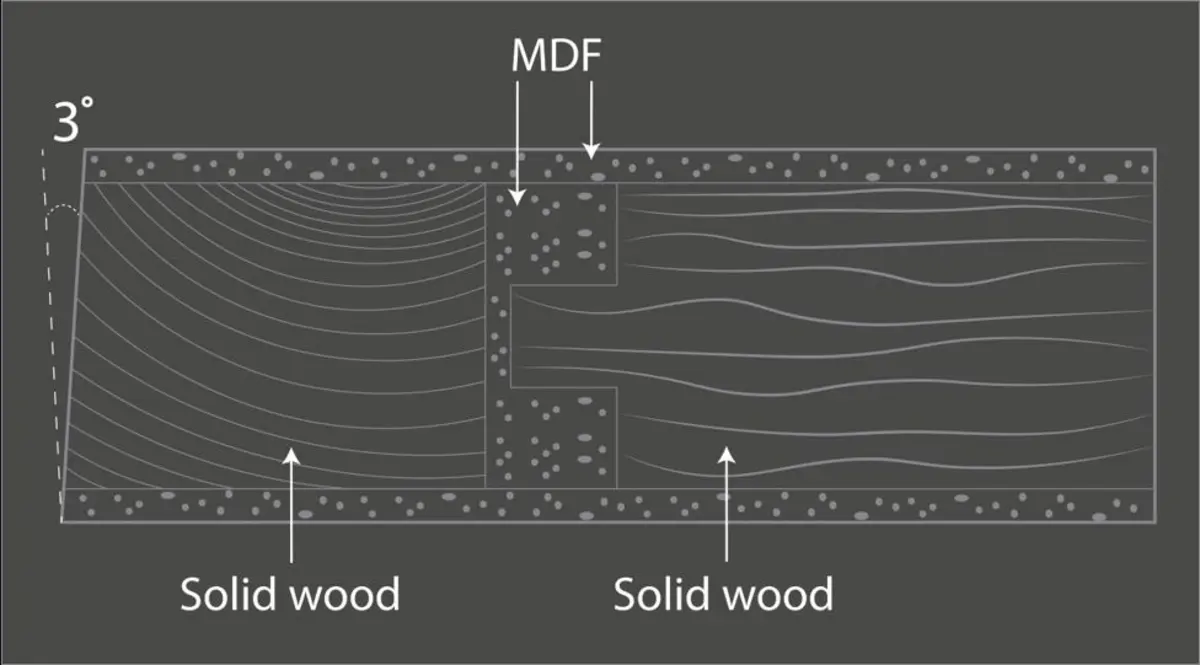
Solid core doors are filled through their full thickness. Our doors use a hybrid construction: solid pine stiles and rails provide the structural frame and screw-holding for hinges and locks, while high-density MDF faces give a perfectly smooth, stable surface for paint. The result is stiff, quiet and resistant to warping — see the cross-section on the home page.
Sound insulation
This is the main reason developers specify solid core for bedrooms and bathrooms. A solid core slab typically achieves STC 30+ compared with roughly STC 20 for hollow core. Combined with tight-fitting double rabbetted jambs, the difference between rooms is obvious to any tenant.
Weight and hardware
A 30×80 solid core slab weighs about 60 lb, roughly twice a hollow core door. That weight is why the top hinge must be screwed into the stud during installation, and why concealed hinges are rated by door weight; our concealed hinges carry up to 60 kg per pair. The upside is a door that closes with a solid, expensive feel.
Durability
Hollow core skins dent from a doorknob or a moving cart and cannot be repaired. Solid core faces are dense MDF: they resist dents, and scratches can be filled and repainted. Hinge and strike screws hold in solid pine instead of a thin skin, so the door does not loosen after years of use.
Paint finish
Both types come primed, but MDF faces are flatter than veneered hollow core skins, so the finish is smoother with less sanding. Our tips are in how to paint factory-primed doors.
Cost
Solid core costs more per slab, but on a project the difference is smaller than it looks: fewer damaged units, no callbacks about noise, and a feature that appraisers and buyers notice. Our wholesale prices start at $107 for a flush solid core slab, and every model page lists slab and pre-hung prices by size.
Where hollow core still makes sense
Closet and pantry doors that are never closed for privacy, or budget rentals where weight matters for installation speed. Even there, many builders now use solid core bi-fold doors for closets so the whole unit feels consistent.
Summary
| Solid core | Hollow core | |
|---|---|---|
| Sound | Good (STC 30+) | Poor |
| Weight (30×80) | ~60 lb | ~25 lb |
| Dent resistance | High | Low |
| Paint finish | Excellent | Fair |
| Feel | Substantial | Light |
| Price | Higher | Lower |
Compare the styles in our guide to types of interior doors or go straight to the price list.